
Sports Experience Hub: How Physical Touchpoints Become Data Sources

Updated: Jan 25
Part 2 of 5: The Data-Driven Future of Fan Engagement and Sponsorship
How Experiential Technology Bridges the Fan Data Gap
In Part 1 of this series, we established a stark reality: 76% of sports fans remain anonymous to the organizations they support, costing rights holders between $1–5 million annually in unrealized revenue (Dizplai, 2026). The conversion rate from social followers to actively transacting fans sits at just 0.5–2%—significantly below the cross-industry median of 6.6%. Sponsorship measurement remains plagued by a 68% potential error rate in ROI calculations (Nielsen Sports, 2021) The diagnosis is clear. The question now is: what does the solution look like?
The answer lies in understanding that the fan data gap is not primarily a digital problem - it is a physical touchpoint problem. Sports organizations have hundreds of moments where fans engage with them in real, measurable ways: at stadium gates, in retail environments, at sponsor activations, during hospitality experiences. Yet most of these touchpoints remain analog islands, generating transactions but not relationships, sales but not data.
Experiential technology - interactive systems that transform passive physical touchpoints into active data-generating experiences - represents the missing link. The Sports Experience Hub is the answer: not merely a point of sale, but a touchpoint that simultaneously delivers value to the fan, captures behavioral data, and creates measurable moments for sponsors.
Sports Experience Hub: The Experience Economy Framework
The theoretical foundation comes from Pine and Gilmore's Experience Economy framework (1999). Their core insight: economic value progresses from commodities to goods to services to experiences. Each level commands higher margins and greater customer loyalty.
Sports organizations occupy a unique position: they already possess the emotional intensity that most businesses spend fortunes trying to manufacture. Decisive moments in live sport trigger the brain's reward system through dopamine release—the same neurological mechanism that drives learning and behavioral reinforcement. According to the Wharton Neuroscience Initiative, gamification elements leveraging this mechanism can boost motivation and productivity by up to 15 percent. The challenge is not creating emotion - it is capturing and channeling that emotion into measurable, monetizable relationships.

Pine and Gilmore identify four experience dimensions: entertainment (passive absorption), education (active absorption), escapism (active immersion), and aesthetics (passive immersion). The most powerful experiences engage all four. A well-designed interactive touchpoint at a stadium doesn't just entertain - it educates the fan about sponsor products, immerses them in gameplay or competition, and creates aesthetically compelling moments they want to photograph and share.
The Logic of Experiential Technology
Experiential technology is not a product category - it is a design philosophy. At its core, it means transforming any physical interaction from a transaction into an experience that generates data as a natural byproduct of engagement.
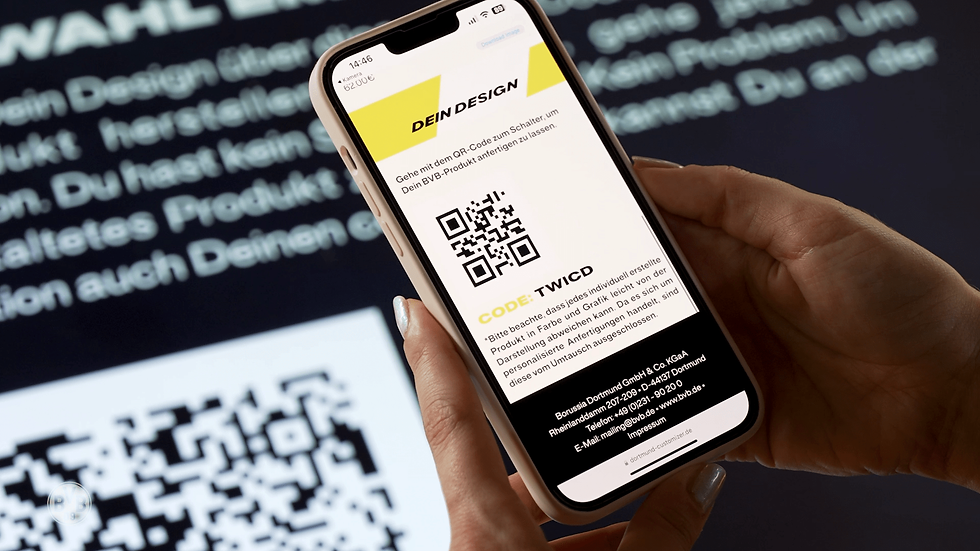
Consider the difference between a traditional merchandise kiosk and an experiential one: The traditional version: a fan approaches, selects a product, pays, leaves. The organization captures a transaction but learns nothing about the buyer beyond payment method.
The experiential version: a fan approaches an interactive display, engages with gamified product discovery, provides an email to unlock a discount, receives personalized recommendations, and completes the purchase. The organization now has a data point, a contact, behavioral signals, and the foundation for a relationship.

According to Deloitte's 2024 research, more than 8 out of 10 sports fans (82%) use their mobile phones during live professional sporting events. When asked about additional capabilities, 77% want replay access, 68% seek alternative viewing angles, and 59% want player point-of-view footage. This digital engagement creates measurable touchpoints that organizations can convert into commercial relationships—if captured by the club rather than third-party platforms. The data is unambiguous: experiential engagement drives commercial outcomes.
Three Functions of a Sports Experience Hub
First: Fan Value Creation
The experience must deliver something the fan actually wants: entertainment, information, competition, reward, or social capital. If the experience feels like a data extraction exercise, fans will disengage. The most effective experiential systems disguise data capture as value delivery - a prediction game, a personalized recommendation, a shareable photo opportunity.
Second: Data Generation
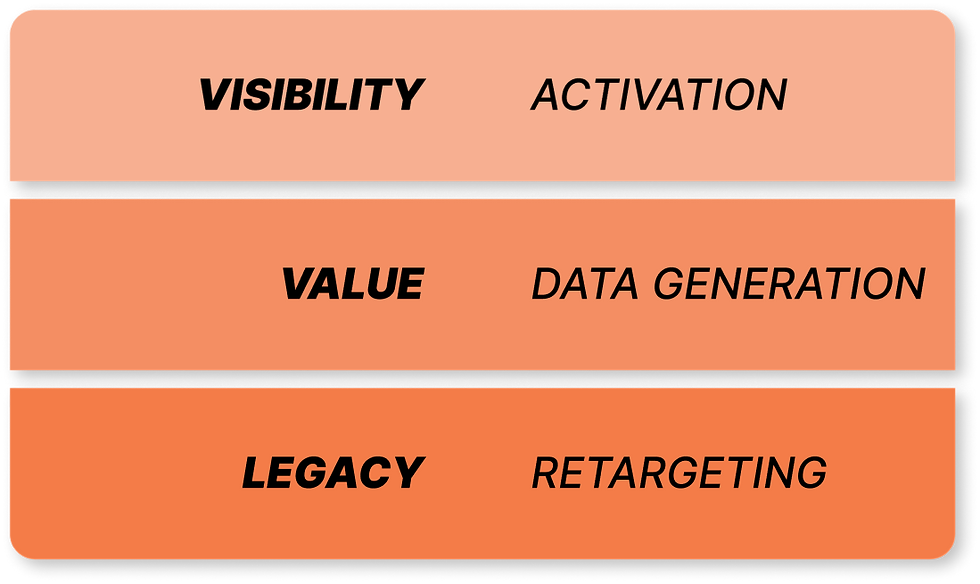
Every interaction should produce structured, actionable data: identity (who is this person?), behavior (what do they do?), preference (what do they like?), and intent (what might they do next?). This data flows into a unified fan profile, enriching the organization's understanding with each touchpoint.
Third: Sponsor Activation
Experiential touchpoints create natural integration opportunities for sponsors that go beyond logo placement. A prediction game can be branded. A photo opportunity can feature sponsor products. Critically, the data generated proves sponsor impact in ways that impressions never could.
Case Study: Borussia Dortmund's Digital Transformation
Borussia Dortmund provides an instructive example of how a traditional club is systematically building experiential infrastructure. Germany's largest stadium, Signal Iduna Park, has become a hub of innovation where tradition meets technology.

The approach is multi-layered: At the infrastructure level, Signal Iduna Park became the world's first Open Radio Access Network (O-RAN) stadium, implementing cutting-edge 4G and 5G connectivity across all 81,000 seats. This is the enabling layer that allows experiential applications to function at scale.
At the content level, BVB partnered with WSC Sports for AI-powered content creation. Director of Communications Sascha Fligge explained: Our digital content strategy is extremely important as the key way to engage our global fanbase who cannot be with us physically at every match.
It creates a unique bridge between the digital and real worlds, enabling us to connect with our fans around the world in innovative ways. Borussia Dortmund stands for passion, community, and innovation.
— Carsten Cramer, BVB Managing Director
The Stadium as Data Platform
The conceptual shift required is significant: stop thinking of a stadium as a venue and start thinking of it as a data platform with 50,000+ simultaneous users generating behavioral signals.
According to a PwC 2024 survey of U.S. sports fans aged 18-34, nearly 70 percent use social media while watching sports at home, and approximately 44 percent actively use social media during live events they attend in person. Fans are already digitally engaged during matchdays - the question is whether the club or third-party platforms capture that engagement.

The New York Islanders' ISLES+ platform demonstrates this principle in action. Fans inside UBS Arena access the platform by scanning a QR code, unlocking multi-angle video, replays, polls, trivia, and interactive challenges throughout the game. Each interaction generates data while enhancing the in-arena experience.
Implications for Digital and Innovation Leaders
The transformation from passive venue to Sports Experience Hub requires a mindset shift for CDOs and innovation leaders. The goal is not to deploy technology for its own sake, nor to chase the latest trend in AR or VR. The goal is to answer a specific strategic question: How do we transform our anonymous physical interactions into identified digital relationships?
This requires auditing every physical touchpoint - entry gates, retail locations, hospitality areas, sponsor activations, concession stands - and asking: What value could we create here that fans would willingly exchange their data for? What sponsor integration would feel natural rather than intrusive?
The infrastructure investment is real but increasingly accessible. Cloud-based fan engagement platforms, AI-powered content systems, and gamification tools have matured significantly. The constraint is less often technology and more often strategic clarity.
Key Takeaways on the Sports Experience Hub
1. Physical touchpoints are the overlooked data opportunity
The fan data gap is primarily a physical touchpoint problem, not a digital one. Organizations with hundreds of in-person fan interactions are generating transactions without generating relationships.
2. Digital engagement creates commercial leverage
82% of fans use mobile devices during events, with strong demand for enhanced features like replays (77%) and alternative angles (68%). Organizations capturing this engagement—rather than losing it to third-party platforms—can build direct, monetizable relationships (Deloitte, 2024).
3. Effective experiential touchpoints serve three functions simultaneously
Fan value creation (entertainment, information, reward), data generation (identity, behavior, preference), and sponsor activation (branded integration with measurable impact).
4. Infrastructure enables but does not guarantee success
Organizations like Borussia Dortmund demonstrate that connectivity infrastructure (5G, O-RAN) creates the enabling layer, but strategic clarity about fan value and data objectives determines outcomes.
5. The stadium is a data platform
With 44 percent of in-venue attendees actively using digital devices during events (PwC, 2024), the question is whether clubs or third parties capture that engagement.
Next in this series: How data-driven fan engagement directly enables optimized sponsorship performance.
Sources
Borussia Dortmund / Coliseum (2024). Signal Iduna Park: Tradition meets technology. https://www.coliseum-online.com/signal-iduna-park-tradition-meets-technology/
Borussia Dortmund / FIFA Rivals (2025). Strategic Partnership Announcement. https://unchainedcrypto.com/press-release/fifa-rivals-and-borussia-dortmund-announce-strategic-partnership-to-power-next-gen-digital-fan-engagement/
Deloitte (2024). Fans want to enhance their in-person professional sports experiences through technology. https://www.deloitte.com/us/en/insights/industry/technology/fans-want-more-tech-features-during-in-stadium-experience.html
Gensler (2024). How Technology Is Redefining the Fan Experience at Sports and Music Venues. https://www.gensler.com/blog/immersive-technology-is-redefining-the-sports-fan-experience
National Retail Federation / Retail Customer Experience (2025). Data-driven experiential displays. https://www.retailcustomerexperience.com/blogs/data-driven-experiential-displays-the-formula-for-retail-success/
Pine, B.J. & Gilmore, J.H. The Experience Economy. Strategic Horizons. https://strategichorizons.com/
PwC / TVU Networks (2024). Digital Fan Engagement Strategies. https://www.tvunetworks.com/guides/sports/how-to-increase-digital-fan-engagement-strategies-technology-proven-results-from-real-teams/
SOLiD / The Mobile Network (2025). Transforming connectivity with O-RAN DAS at Dortmund Stadium. https://the-mobile-network.com/2025/05/case-study-transforming-connectivity-with-o-ran-das-at-dortmund-stadium/
WSC Sports (2024). Borussia Dortmund Selects WSC Sports for Digital Content and Fan Engagement. https://wsc-sports.com/blog/news/borussia-dortmund-selects-wsc-sports-to-power-digital-content-and-fan-engagement-goals/


